

Whoa! Okay—quick honesty up front: I’m picky about wallets. Really picky. My instinct said early on that a wallet isn’t just a key store; it’s the last line of defense between your funds and a bad day. Something felt off about treating them like neutral tools. They matter. Big time.
Here’s the thing. Most guides talk about seed phrases and hardware devices like they’re the only game in town. That’s true, but it’s the surface. For anyone who actually interacts with dApps — swapping, staking, bridging, or running complex contracts — you need a wallet that surfaces risk, simulates transactions, and helps you reject the bad ones before you hit confirm. I’m going to walk through how I assess wallets for dApp integration and ongoing risk assessment, what I look for in UX and security, and a few practical heuristics you can use right away.
Short list first: look for transaction simulation, fine-grained permission management, clear network context, activity logs, and an easy way to use a hardware key without fighting with the UX. That’s the baseline. But there’s nuance. On one hand, you want convenience—on the other, the convenience shouldn’t hand your keys to a contract with a single click. Initially I thought convenience and safety were opposites, but then I realized you can design for both.
Why transaction simulation matters (and how to read it)
Medium truth: most people hit confirm and hope for the best. Meh. Don’t be most people. Transaction simulation gives you a dry run — gas estimate, state changes, token transfers, and whether an approval is being requested. If a wallet shows a full simulation, it can reveal unexpected token transfers or contract calls that would otherwise be hidden behind a cryptic “confirm” dialog.
When I see a wallet offer simulation I ask: does it show what storage slots change? Does it break down ERC-20 approvals into amounts and recipients? Can I see the calldata decoded into human terms? If the answers are yes, that’s a winner. If not, it’s still better than nothing, but treat it like a partial defense.
Also: simulation can be used proactively. I run hypothetical transactions in a sandbox or via a wallet that supports off-chain simulation to see how a dApp behaves — does it call a router contract a dozen times? Does it attempt to spend tokens I didn’t intend to use? Those flags save meatspace panic later.
Permissions and session management — the softer, crucial stuff
Seriously? You still rely on infinite approvals? Come on. A modern wallet should make it trivial to see and revoke contract allowances. It should let you set session scopes for dApps (read-only vs. spend) and time-limited approvals. If you can’t scope permissions, pretend the wallet doesn’t exist for complex dApp use.
My instinct used to be “revoke when necessary”—but that felt like playing whack-a-mole. Actually, wait—let me rephrase that: I now prefer wallets that encourage minimal privileges by default, and that nudge users to confirm explicit allowances. On one hand, it requires more clicks; on the other, it avoids catastrophe. Tradeoffs, right?
Network context, UX cues, and preventing silly mistakes
Small detail, big impact: the wallet must always make the network obvious. Color-shift the chrome for testnets, prominently show chain IDs, and warn on chain mismatches. I once nearly approved a bridge tx on the wrong chain (facepalm). If the wallet flashed a red banner, I might’ve saved myself a headache.
Good UX also includes human-readable confirmations — not raw hex and not just “approve”. When a dApp asks to spend a token, show token name, amount, and the contract address with a one-click lookup. (Oh, and by the way… a contract name lookup with a reputable source goes a long way.)
Hardware key integration — don’t make me struggle
I like hardware wallets. I’m biased, but they reduce blast radius. That said, the integration has to be seamless. If the wallet forces awkward workarounds or hides which actions require the hardware key, you’ll see users disable it. A wallet worth using will let you keep the hardware key attached for signing dApp transactions, show which approvals will be signed on-device, and detect when a hardware key is missing before you try to confirm.
On the topic of signing, I pay attention to whether the wallet displays full calldata or a decoded intent before sending it to the hardware device. If the device just shows “approve” with no context, the wallet is partly to blame.
Risk signals I hunt for during dApp integration
Here’s my checklist when I connect to a new dApp:
- Is the dApp requesting an approval that exceeds my expected amount? (Short: don’t approve infinite amounts.)
- Does the simulation show token transfers to unexpected addresses?
- Are there re-entrancy-like patterns or external calls that touch HOT wallets?
- Is the contract verified? If not, proceed with extreme caution.
- Can I limit the approval to a single use or set an allowance cap?
I’ll be honest: sometimes the dApp is legit but sloppy. This part bugs me — legit teams often ship with lax UX and that creates risk. Your job as a user is to be wary and to prefer wallets that show you what’s actually going on.
A practical workflow I use
Okay, so check this out—my standard flow:
- Connect a wallet with strong permission controls and simulation features.
- Simulate the exact transaction off-chain if possible.
- Use a hardware key for risky approvals.
- Set minimal allowances and revoke after use.
- Log activity and cross-check on-chain events after execution.
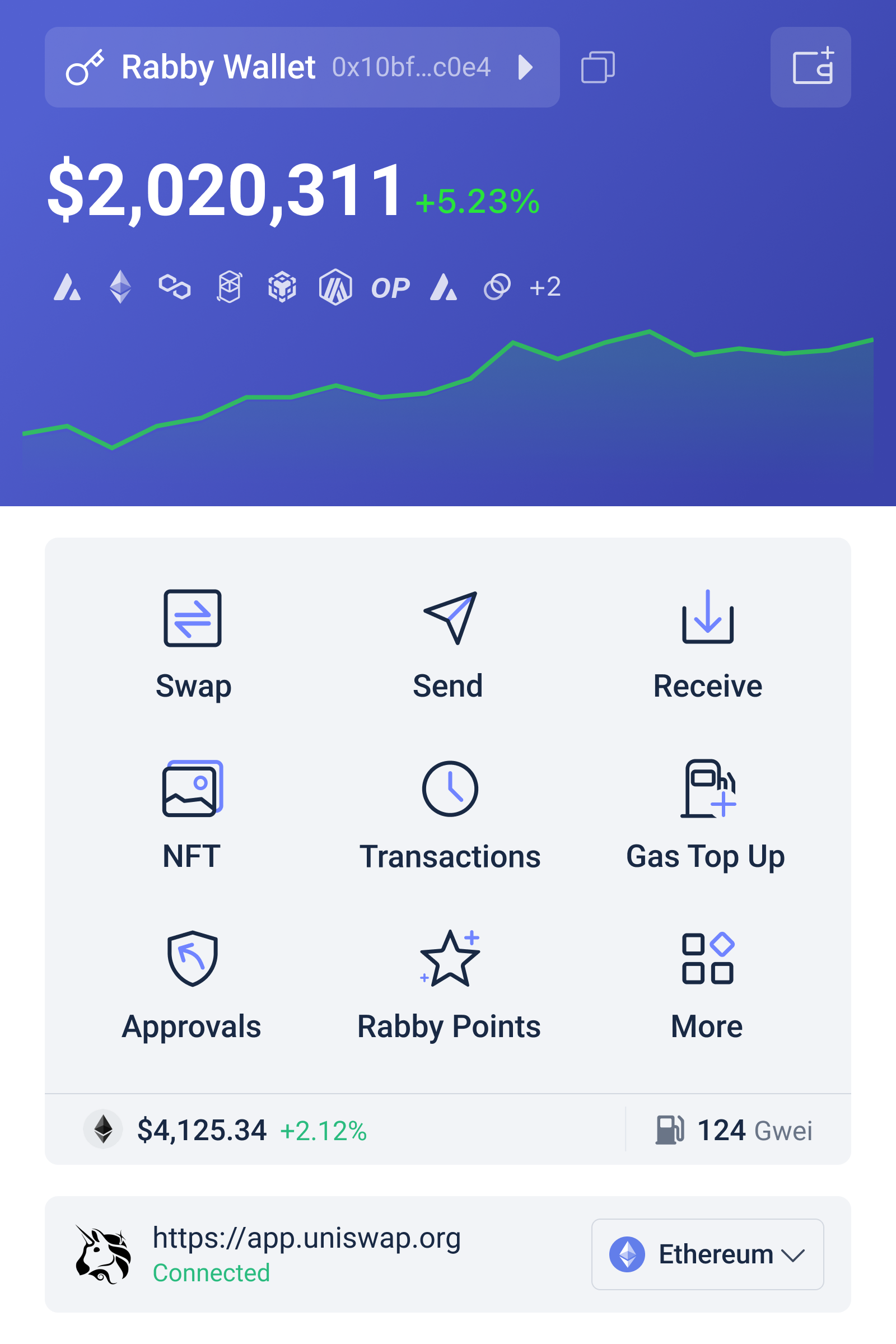
For folks who want a wallet that emphasizes those things, I’ve spent time with several and found one that strikes a good balance between UX and risk tooling — rabby. It surfaces transaction details clearly, supports permission management, and makes hardware integration fairly painless. I’m not saying it’s perfect, but it fits this workflow well.
Common questions people actually ask
How often should I revoke approvals?
Whenever you finish interacting with a dApp that needed spending rights. If it’s a long-term service you trust, set a limited allowance rather than infinite. I’m not 100% sure about a strict cadence—monthly revokes are reasonable for heavy users; for occasional interactions, revoke when done.
Does transaction simulation prevent scams?
It helps a lot. Simulation doesn’t stop on-chain exploits, but it exposes suspicious intent (unexpected transfers, weird calldata). Think of it like a metal detector—useful, but not infallible.
What if a dApp refuses to work with minimal allowances?
That’s a red flag. Some legacy dApps require infinite approvals for UX simplicity. Consider using a proxy contract or a wallet that offers one-click approvals with caps, or avoid the dApp if it can’t demonstrate why it needs broad permissions.